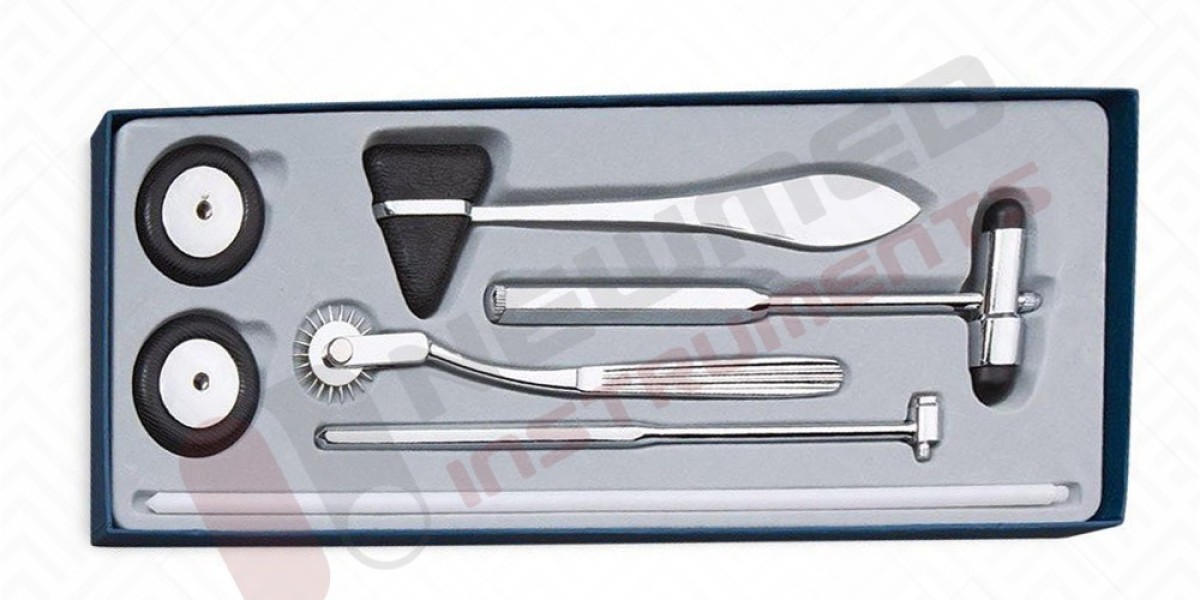
A neurological examination is a cornerstone of clinical practice, providing invaluable insights into the functioning of the central and peripheral nervous systems. Among the array of instruments used, the reflex hammer stands out for its simplicity and diagnostic power. This seemingly basic tool is indispensable for eliciting deep tendon reflexes, a critical component in assessing the integrity of the spinal cord and peripheral nerves. For healthcare professionals who demand precision, understanding the nuances of this instrument is key to accurate patient evaluation.
The Purpose of a Neurological Hammer
The primary function of a neurological hammer is to test deep tendon reflexes. When a practitioner strikes a tendon, it briefly stretches the muscle, stimulating sensory receptors. This sends a signal along a sensory nerve to the spinal cord, which then sends a motor command back to the muscle, causing it to contract. This entire circuit, known as the reflex arc, provides a window into the state of the nervous system. An absent, diminished, or exaggerated reflex can indicate underlying pathology, from nerve root compression to upper motor neuron lesions.
Anatomy of a High-Quality Reflex Hammer
While all reflex hammers serve the same fundamental purpose, their design can significantly impact the ease and accuracy of the examination. A quality instrument typically consists of a sturdy handle and a weighted head, often made of rubber or silicone. The handle provides a comfortable, balanced grip, allowing the practitioner to execute a smooth, pendulum-like swing. The head is engineered to deliver a precise stimulus without causing patient discomfort, ensuring a reliable reflex response. For discerning professionals, the choice of a well-crafted reflex hammer is a commitment to diagnostic excellence.
Different Types of Reflex Hammers
Over the years, several designs have emerged, each with unique characteristics. The Taylor or tomahawk hammer is perhaps the most recognized, with its triangular rubber head. The Queen Square hammer features a plastic handle with a metallic disc surrounded by a soft ring, often preferred for its ability to elicit plantar reflexes with its tapered handle tip. The Babinski hammer, with its disc-shaped head, can be oriented perpendicularly to the shaft, offering versatility. Each design provides a slightly different feel and response, and the choice often comes down to practitioner preference and training.
Proper Technique for Eliciting Reflexes
Using a reflex hammer effectively is a skill that combines knowledge of anatomy with practiced technique. The key is to hold the hammer loosely and allow its weight to do the work, striking the tendon with a brisk, direct tap. The patient’s muscle must be relaxed, and their limb properly positioned to allow for a clear contraction. Eliciting reflexes in the biceps, triceps, brachioradialis, patella, and Achilles tendon requires locating the correct anatomical landmark and applying the right amount of force to generate a clear and interpretable response.
The Importance of the Patellar Reflex
The patellar reflex, or knee-jerk reflex, is one of the most commonly tested reflexes. It assesses the L2, L3, and L4 spinal segments. To perform the test, the patient's leg should be dangling freely. The practitioner then taps the patellar tendon just below the kneecap. A normal response is the contraction of the quadriceps muscle, causing the lower leg to kick forward. This simple test can help identify conditions affecting the lumbar spine or femoral nerve, making the reflex hammer a powerful first-line diagnostic tool.
Assessing the Biceps and Triceps Reflexes
In the upper limbs, the biceps and triceps reflexes are crucial for evaluating the cervical spine. The biceps reflex, which tests the C5 and C6 nerve roots, is elicited by tapping the biceps tendon with the patient's arm partially flexed. The triceps reflex, testing C7 and C8, is performed by striking the triceps tendon just above the elbow while the arm is supported. Variations in these reflexes can point to specific levels of spinal cord injury or peripheral neuropathy.
The Role of the Reflex Hammer in Medical Education
For medical and nursing students, mastering the use of the neurological hammer is a fundamental rite of passage. It is one of the first clinical skills they learn that directly connects anatomical knowledge to physical diagnosis. Practicing with a square hammer builds confidence and refines technique, preparing students for the complexities of patient care. A reliable and well-balanced instrument is an essential part of any student’s medical kit, serving as a constant companion throughout their training and into their professional careers.
Conclusion: More Than Just a Simple Tool
The reflex hammer is far more than a piece of rubber and metal; it is a symbol of the clinical craft. In the hands of a skilled surgeon, physician, or student, it becomes a precise instrument capable of uncovering subtle neurological signs. It bridges the gap between patient symptoms and objective findings, guiding further investigation and treatment. Investing in a high-quality instrument from a trusted provider like New Med Instruments ensures that every examination is performed with the accuracy and professionalism that patients deserve.