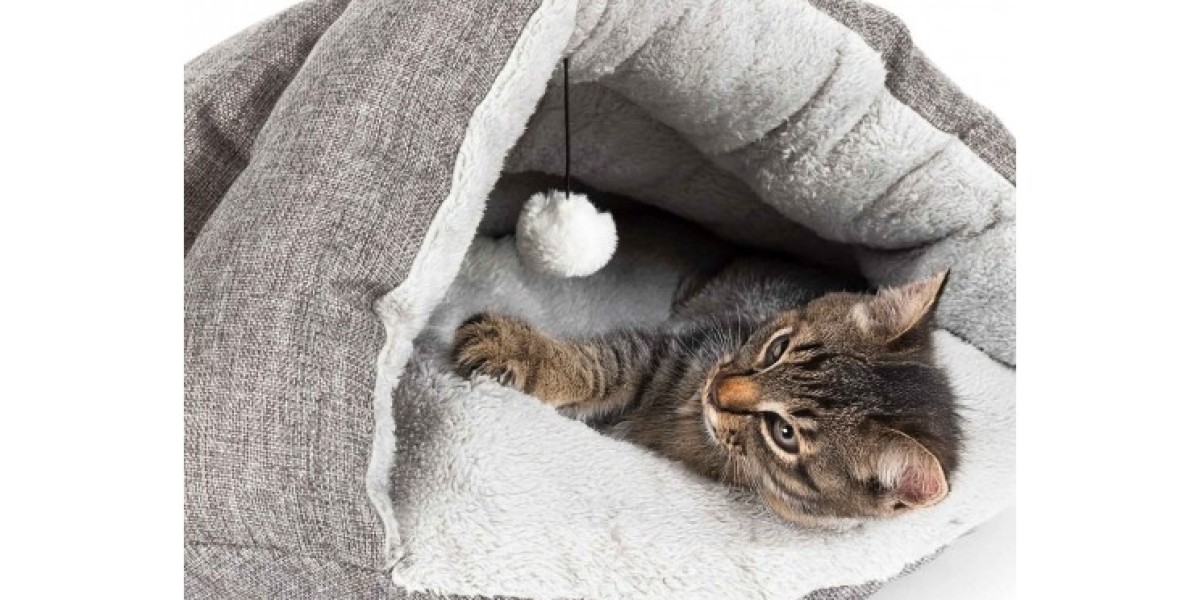
When your cat disappears under the bed at the first sound of the doorbell, or spends hours tucked away in the back of a wardrobe, it's easy to interpret this as antisocial behavior or even rejection. Many cat owners worry their feline companion is unhappy or doesn't trust them. But the truth is far more nuanced and reassuring: hiding is not only normal feline behavior, it's actually essential for your cat's emotional wellbeing. Cave cat beds tap into this fundamental instinct, providing purpose-built private retreats that help cats feel secure in their environment.
Understanding why cats hide, what triggers this behavior, and how to support it appropriately can transform your relationship with your cat and significantly reduce their stress levels. Rather than trying to coax your cat out of hiding or feeling hurt by their withdrawal, recognizing their need for enclosed, protected spaces allows you to become a better guardian of their mental health.
The Evolution of Feline Hiding Behavior
To understand why domestic cats seek enclosed spaces, we need to look at their evolutionary history. Cats are simultaneously predators and prey animals, a dual role that profoundly shapes their behavior. In the wild, small to medium-sized cats face threats from larger predators, making vulnerability management crucial to survival.
Enclosed spaces offer multiple survival advantages. They provide protection from larger predators who cannot easily access tight spaces. They create ambush points from which cats can observe surroundings while remaining concealed, crucial for both hunting and safety. These hideouts allow vulnerable activities like sleeping, grooming, or recovering from illness to occur with reduced predator risk. Finally, they offer temperature regulation, with enclosed spaces typically being warmer and more stable than exposed areas.
These instincts haven't disappeared through domestication. Your indoor cat, despite never facing a wild predator, still carries the genetic programming that says "enclosed space equals safety." When stressed, frightened, unwell, or simply needing rest, cats instinctively seek the security of a den-like environment. This isn't learned behavior, it's hardwired into their neurology.
What Triggers Hiding in Domestic Cats
While the instinct to hide is natural, certain situations and stressors intensify this need in domestic environments. Understanding these triggers helps explain why your cat might suddenly increase their hiding behavior.
Environmental changes top the list of stress triggers. Moving house, renovation work, new furniture arrangements, or even subtle changes like new curtains can make cats feel their territory has become unpredictable and unsafe. Loud or unfamiliar noises, including vacuum cleaners, washing machines, construction sounds, doorbells, or thunderstorms, send many cats running for cover. Social stressors such as visitors to the home, particularly those bringing unfamiliar scents or children who move unpredictably, can overwhelm cats. New pets being introduced to the household, whether another cat, a dog, or even smaller animals, fundamentally disrupt the existing territorial dynamic.
Health issues frequently increase hiding behavior. Cats instinctively conceal illness or pain, a survival mechanism preventing them from appearing vulnerable to predators. If your cat suddenly hides more than usual without obvious environmental triggers, a veterinary check is warranted as this can be an early indicator of medical problems.
Multi-cat households present unique challenges. Even cats who generally coexist peacefully need escape routes and private spaces to manage social complexity. The ability to retreat and be alone becomes crucial for maintaining household harmony. Without adequate hiding options, territorial disputes and stress-related behaviors like inappropriate elimination or aggression often increase.
The Psychological Benefits of Hiding
Far from being problematic, appropriate hiding behavior offers significant psychological benefits for cats. Understanding these benefits helps reframe hiding as healthy self-care rather than concerning withdrawal.
Stress reduction is the primary benefit. When cats retreat to enclosed spaces, their cortisol levels measurably decrease. The enclosed environment provides a sense of control and safety that allows their nervous system to shift from alert, stressed states into relaxed, restful ones. For chronically anxious cats, access to reliable hiding spots can mean the difference between manageable stress and severe behavioral problems.
Emotional regulation becomes possible through hiding. Cats experiencing fear, frustration, or overstimulation can remove themselves from triggering situations and self-soothe. This is emotionally healthy behavior, not avoidance. It demonstrates your cat has appropriate coping mechanisms and understands their own needs.
Territory management, particularly in multi-cat homes, relies heavily on the availability of private spaces. Cats are not naturally social animals in the way dogs are. While they can form bonds and live peacefully together, they need the option to be alone. Hiding spaces allow cats to temporarily remove themselves from social interactions when they've reached their tolerance limit, preventing conflicts and reducing chronic stress from feeling constantly monitored by other cats.
Sleep quality improves dramatically when cats have secure, enclosed sleeping areas. Cats sleep 12-16 hours daily, and much of this is light, easily-disrupted sleep where they remain somewhat alert to their surroundings. Truly restful deep sleep occurs most readily when cats feel completely safe. An enclosed space provides this security, allowing them to fully relax rather than maintaining perpetual vigilance.
Why Standard Hiding Spots Fall Short
Many cats make do with whatever hiding options their homes offer: under beds, in wardrobes, behind furniture, or in cardboard boxes. While these serve basic hiding needs, they often fall short of ideal for several reasons.
Accessibility issues are common. The space under your bed might require your cat to squeeze through a tight gap, difficult for larger cats, senior cats with arthritis, or those with mobility issues. Wardrobes require doors to be left open, disrupting your home's appearance and potentially allowing cats to damage clothing or get accidentally shut in.
Temperature and comfort problems affect improvised hiding spots. Under beds can be dusty, cold, and uncomfortable, especially on hard floors. Behind furniture may trap heat or expose cats to drafts. Cardboard boxes, while initially appealing, deteriorate quickly, become dirty, and lack any cushioning for comfort.
Hygiene concerns arise with most improvised spots. The space under beds accumulates dust and debris. Cats sleeping in these areas may develop respiratory irritation or skin problems. These spaces are also difficult to clean without disturbing your cat's sanctuary.
Lack of ownership clarity can make improvised hiding spots stressful rather than comforting. In multi-cat households, under-bed spaces or cupboards aren't clearly "belonging" to any particular cat, potentially leading to disputes or cats feeling they cannot truly relax even in hiding.
Cave Cat Beds: Purpose-Built Private Retreats
Cave cat beds address these shortcomings by providing purpose-designed enclosed spaces that meet cats' instinctive needs while offering practical benefits for owners.
The design itself taps into feline psychology. The enclosed structure with a single entrance creates that essential den-like environment where cats feel protected on all sides except their chosen exit point. This architectural feature allows cats to monitor the entrance while feeling secure from behind and above, the same spatial arrangement they'd seek in natural hideouts.
Materials matter significantly. Quality cave beds use soft, insulated fabrics that provide warmth and comfort, crucial since cats seek hiding spots partially for temperature regulation. The internal space is cushioned, addressing the comfort issues of hard floors under beds or cold tile in corners. The enclosed design naturally retains body heat, creating a cozy microclimate that appeals deeply to cats.
Size appropriateness ensures cats can fully stretch out or curl comfortably without feeling cramped, while remaining enclosed enough to provide that secure feeling. Well-designed cave beds strike this balance, offering sufficient internal space without losing the "enclosed retreat" quality cats seek.
Hygiene becomes manageable with cave beds designed for cat ownership. Many feature removable, washable covers or components that can be cleaned easily, maintaining a fresh, healthy sleeping environment without destroying the bed or disturbing your cat's sanctuary for extended periods. This is impossible with spaces under furniture or behind appliances.
Portability allows the cave bed to move with your cat's preferences and your household needs. If you're renovating one room, the cave bed can relocate to a quieter area. If your cat prefers different locations seasonally, perhaps cooler spots in summer and warmer areas in winter, the cave bed easily accommodates this.
Territorial clarity, especially valuable in multi-cat homes, comes from providing each cat their own designated cave bed. This gives every cat a space that's clearly "theirs," reducing conflicts and ensuring each cat can fully relax without territorial stress. Multiple cats sharing a home need multiple retreat options, and cave beds provide this more effectively than fighting over the same under-bed space.
Supporting Healthy Hiding Behavior
Providing appropriate hiding options is just the first step. Supporting your cat's use of these spaces requires understanding and respect for their needs.
Placement matters enormously. Position cave beds in quiet, low-traffic areas away from loud appliances, busy doorways, or areas where people constantly pass. Cats won't use a retreat positioned in the middle of activity, no matter how perfect its design. Consider locations that offer visual privacy as well, perhaps in corners or against walls where your cat can observe the room entrance from their hideout.
Never force interaction with a hiding cat. When your cat retreats to their cave bed or any hiding spot, that's a clear signal they need space. Pulling them out, reaching in to pet them, or trying to coax them out for interaction violates their trust and makes the space feel unsafe. The hiding spot must be a guaranteed sanctuary where your cat controls all interactions. If children are in the home, establishing this rule is crucial. The cave bed is the cat's private room where they're never to be disturbed.
Positive associations should develop naturally, but you can encourage this. Occasionally place a special treat inside the cave bed when your cat isn't around, creating pleasant surprises. Don't make this a bribe or trick to trap your cat, just occasional positive experiences associated with the space. Never use the cave bed for anything your cat dislikes such as medication administration, nail trimming, or forced handling. These must occur elsewhere to preserve the cave bed as a purely safe zone.
Multiple options for multiple cats is non-negotiable in multi-cat homes. Provide at least one cave bed per cat, plus one extra. This ensures every cat has guaranteed access to private space without competition. Place them in different areas so cats don't feel forced to encounter each other to access retreat spaces.
When to Be Concerned About Hiding
While hiding is healthy behavior, sudden changes in hiding patterns can indicate problems requiring attention. If your cat who previously hid occasionally suddenly spends most of their time hidden, this warrants investigation. Similarly, if a usually confident cat begins hiding frequently, something has changed in their environment or health status.
Check for environmental stressors first. Has anything changed in the home? New sounds, new people, new pets, new furniture, renovation work? Sometimes stressors obvious to us don't register as significant, while subtle changes we barely notice can deeply affect cats. Address these stressors when possible.
If no environmental explanation exists, schedule a veterinary examination. Increased hiding frequently accompanies illness or pain. Cats who feel unwell instinctively seek enclosed, quiet places to rest and recover. Early veterinary intervention provides better outcomes for whatever health issue might be developing.
Conclusion
Your cat's hiding isn't rejection, fear, or antisocial behavior. It's healthy self-regulation and emotional management rooted in evolutionary survival strategies that remain relevant even in safe domestic environments. Rather than trying to eliminate hiding behavior or feeling hurt by your cat's retreats, embracing and supporting this need transforms your ability to provide appropriate care.
Cave cat beds offer purpose-built solutions that honor feline psychology while providing practical benefits for modern homes. They give your cat the secure, comfortable, clean private retreat they instinctively crave, reducing stress and improving overall wellbeing. For multi-cat households, they provide crucial individual territories that prevent conflicts and allow each cat to manage social complexity on their own terms.
Understanding your cat means accepting them as the sophisticated, instinct-driven beings they are. When you provide a beautiful cave bed in a quiet corner and watch your cat settle contentedly inside, you're not just offering furniture. You're offering security, respect, and the message that their emotional needs matter. That understanding forms the foundation of a trusting, enriching relationship that benefits both of you.