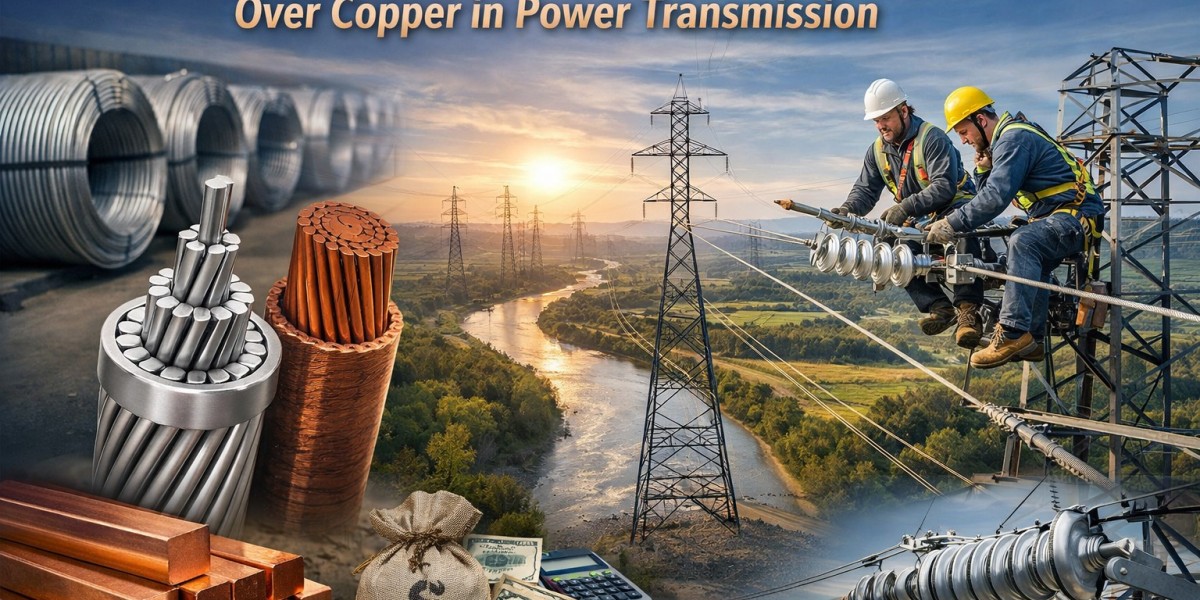
In today’s rapidly expanding power transmission and distribution networks, the bare conductor remains one of the most critical building blocks for reliable and cost-effective electricity delivery. From high-voltage overhead lines to substation interconnections and rural electrification projects, bare conductors continue to be widely specified by utilities, EPC contractors, and grid operators worldwide.
As a global manufacturer of overhead conductors and power cables, HNBF Power supplies a complete range of bare conductor solutions designed for demanding utility environments, long service life, and stable electrical performance. This guide explains what a bare conductor is, how it is used in real grid projects, and how engineers and procurement teams can select the right conductor type for long-term network reliability.
What Is a Bare Conductor?
A bare conductor is an electrical conductor without any insulation or protective sheath. It is typically installed in open air on poles or transmission towers, where the surrounding environment provides the necessary clearance and insulation distance.
Bare conductors are mainly used in:
Overhead transmission and distribution lines
Substation busbars and jumpers
Railway electrification systems
Grounding and earthing networks
Because of their direct exposure to weather and mechanical loads, bare conductors must be carefully designed to balance electrical conductivity, tensile strength, corrosion resistance, and sag performance.
Common Types of Bare Conductors Used in Power Networks
HNBF Power manufactures a full portfolio of bare conductor products that meet international utility standards and project specifications.
AAC – All Aluminum Conductor
AAC bare conductor is made entirely of aluminum strands. It offers excellent electrical conductivity and is commonly applied in:
Urban distribution lines
Short to medium spans
Coastal or corrosion-sensitive environments
AAC is lightweight and easy to install, making it suitable for distribution upgrades and compact line corridors.
AAAC – All Aluminum Alloy Conductor
AAAC bare conductor uses aluminum alloy strands instead of pure aluminum. Compared with AAC, it provides:
Higher mechanical strength
Better sag control over long spans
Improved corrosion resistance
AAAC is widely selected for modern distribution and medium-voltage overhead lines where both electrical and mechanical performance are important.
ACSR - Aluminum Conductor Steel Reinforced
ACSR bare conductor combines aluminum strands with a steel core. It is the most commonly specified solution for:
Long-span transmission lines
High mechanical load environments
High-voltage overhead projects
The steel core delivers high tensile strength, while the aluminum layers ensure efficient current carrying capacity.
Key Engineering Advantages of Bare Conductors
High Current Carrying Capacity
Bare conductors provide direct heat dissipation to ambient air, allowing higher current ratings compared with insulated cables of the same size. This makes them ideal for overhead transmission and substation interconnections.
Proven Long-Term Reliability
With proper material selection and design, a bare conductor can operate for several decades. Modern manufacturing processes and strict quality control significantly improve strand consistency and fatigue resistance.
Flexible System Design
Engineers can select different conductor constructions, strand counts, and cross-sectional areas to meet specific line routing, loading, and voltage requirements.
How to Select the Right Bare Conductor for Your Project
Electrical Requirements
The rated current, system voltage, and short-circuit performance directly affect conductor size selection. Engineers must calculate ampacity and thermal limits under worst-case environmental conditions.
Mechanical Performance
Span length, wind pressure, ice loading, and tower configuration determine the required tensile strength and sag characteristics. For long spans and harsh climates, ACSR or high-strength AAAC options are usually recommended.
Environmental Conditions
Corrosive environments, coastal regions, or industrial zones may require aluminum alloy conductors or special surface treatments to ensure long-term durability.
Compliance with Utility Standards
Bare conductors must comply with recognized international standards and project-specific technical specifications. HNBF Power supports global projects with standardized and customized conductor designs suitable for utility and EPC requirements.
Why Utilities and EPC Contractors Choose HNBF Power
As a specialized global supplier of overhead conductors and power cables, HNBF Power offers complete bare conductor solutions for transmission and distribution networks.
HNBF Power’s manufacturing portfolio includes:
AAC, AAAC, and ACSR bare conductors
ABC cables, LV power cables, and concentric cables for integrated network solutions
Customized conductor construction based on project load, span, and environmental conditions
With a strong focus on power utilities and grid infrastructure projects, HNBF Power supports engineers and procurement teams through technical consultation, product selection, and project-specific manufacturing. This ensures stable quality, consistent delivery, and full alignment with modern grid performance requirements.
Applications of Bare Conductors in Modern Grid Infrastructure
Overhead Transmission Lines
Bare conductors are the primary medium for high-voltage and extra-high-voltage transmission systems, delivering power efficiently across long distances with minimal electrical loss.
Distribution Networks
Medium- and low-voltage overhead distribution networks rely on bare conductors for feeder lines, laterals, and service connections in both urban and rural environments.
Substations and Switchyards
Bare conductors are widely used as rigid or flexible bus conductors, jumpers, and equipment interconnections inside substations and outdoor switchyards.
Quality and Manufacturing Considerations
High-performance bare conductor production depends on:
Accurate aluminum and steel wire drawing
Controlled stranding tension and lay length
Uniform surface finish and dimensional consistency
Mechanical and electrical testing before delivery
HNBF Power applies strict in-process quality controls to ensure each bare conductor meets mechanical strength, resistance, and dimensional stability requirements required for utility-grade installations.
FAQs - Bare Conductor Selection and Use
1. What is the main difference between AAC, AAAC, and ACSR bare conductors?
AAC offers the highest conductivity and light weight, AAAC provides better mechanical strength and corrosion resistance, and ACSR delivers the highest tensile strength through its steel-reinforced core.
2. Is bare conductor suitable for all voltage levels?
Yes. Bare conductors are used across distribution, transmission, and extra-high-voltage systems when proper clearances and insulation coordination are applied.
3. How does environmental exposure affect bare conductor life?
Material selection plays a major role. Aluminum alloy and properly designed conductors can significantly reduce corrosion risks in aggressive environments.
4. Can bare conductors be customized for special projects?
Yes. HNBF Power provides customized bare conductor constructions based on span length, mechanical loading, temperature class, and project-specific utility standards.
Contact HNBF Power for Customized Bare Conductor Solutions
Selecting the right bare conductor is critical to the safety, reliability, and lifecycle cost of your transmission and distribution project.
Whether you are planning a new overhead line, upgrading an existing network, or developing a large-scale utility infrastructure project, contact HNBF Power today to discuss your technical requirements and receive professional, customized bare conductor solutions tailored to your grid application.