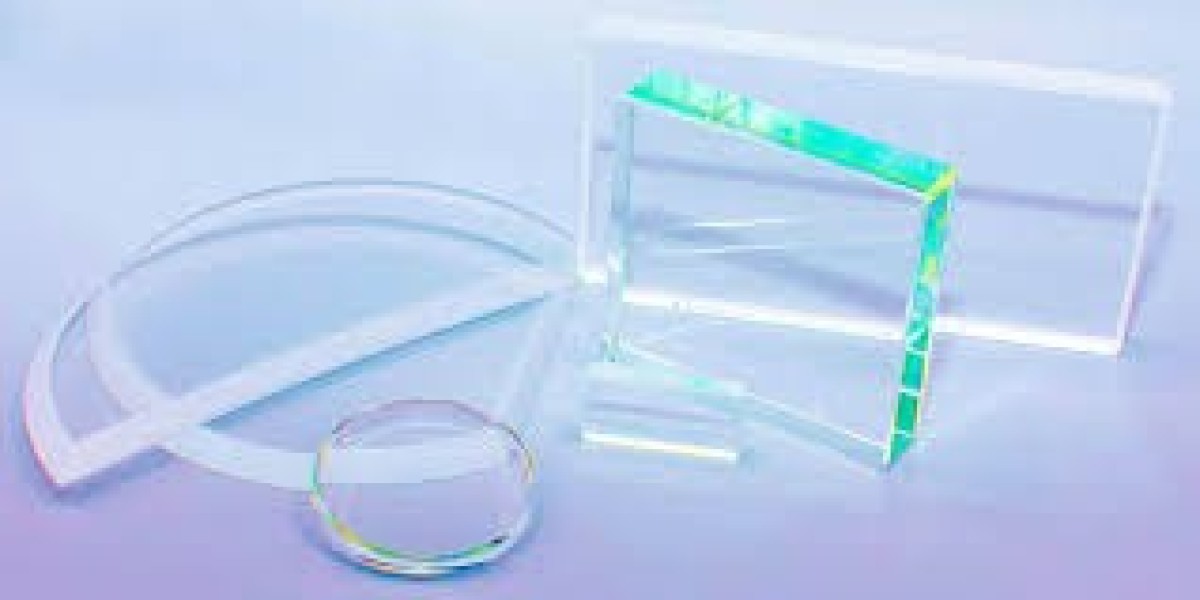
Many optical devices fail not because of poor lenses or weak electronics, but because of one small overlooked component — the protective window at the front. When this layer gets scratched, foggy, or causes light reflection, the entire optical performance drops.
Thermal cameras, night vision systems, sensors, and laser equipment all rely on a strong and clear protective layer. If the material is not designed for optical transmission, users experience image blur, signal loss, and reduced accuracy. This is why selecting the correct window glass is critical in the optical industry.
Why Ordinary Protective Glass Fails in Optical Applications
Many manufacturers use standard glass as a protective cover. While it may protect against dust, it creates serious optical problems:
High surface reflection causing light loss
Poor transmission for infrared or specific wavelengths
Easy surface scratches affecting clarity
Fogging in humid or outdoor environments
Thermal stress cracks in high-temperature conditions
These issues directly reduce the efficiency of sensors and imaging systems.
What Is Optical-Grade Window Glass?
Optical-grade window glass is specially manufactured for maximum light transmission while protecting internal optical components. It is polished with high precision and often coated to improve performance.
This type of glass is designed to:
Provide high transmission across required wavelengths
Resist scratches and environmental damage
Maintain flatness and surface quality
Reduce reflection with optical coatings
Withstand temperature and pressure changes
These properties make it ideal for professional optical systems.
How It Improves Image and Sensor Accuracy
When the front window is optically clear and properly coated, it allows light, infrared, or laser signals to pass without distortion.
Better Image Clarity
No haze, scratches, or reflection means sharper imaging in cameras and viewers.
Accurate Sensor Readings
Sensors receive true signals without signal loss caused by poor material.
Reduced Glare and Reflection
Anti-reflective coatings minimize unwanted light interference.
Long-Term Optical Stability
High durability ensures consistent performance over time.
Common Applications in the Optical Industry
This specialized protective glass is widely used in:
Thermal imaging cameras
Night vision devices
Laser systems
Optical sensors
Medical imaging equipment
Industrial inspection optics
Outdoor surveillance systems
In all these devices, optical performance depends heavily on the quality of the front window.
Environmental Resistance Is a Major Advantage
Optical devices are often used in harsh environments — dust, rain, humidity, and extreme temperatures. Standard glass quickly degrades under these conditions.
High-quality window glass is designed to resist:
Moisture and fogging
Surface abrasion
Chemical exposure
Temperature fluctuations
This ensures the internal optics remain protected without sacrificing performance.
Importance of Coatings on Optical Windows
Optical window glass often includes coatings such as:
Anti-reflective (AR) coating for better transmission
Scratch-resistant coating for durability
Infrared or UV coatings for specific applications
These coatings enhance performance based on the device’s operational needs.
Why This Component Is Often Ignored
Many product designers focus on lenses and sensors but overlook the importance of the front protective window. However, even the best lens cannot perform well if the first surface the light hits is poor in quality.
Investing in proper optical window material improves the entire system’s reliability and output.
The First Surface Light Touches Determines Everything
In optical systems, the first surface light interacts with plays a major role in final performance. If that surface is low quality, the whole system suffers.
Choosing the right window glass ensures maximum transmission, durability, and long-term optical clarity for professional devices.