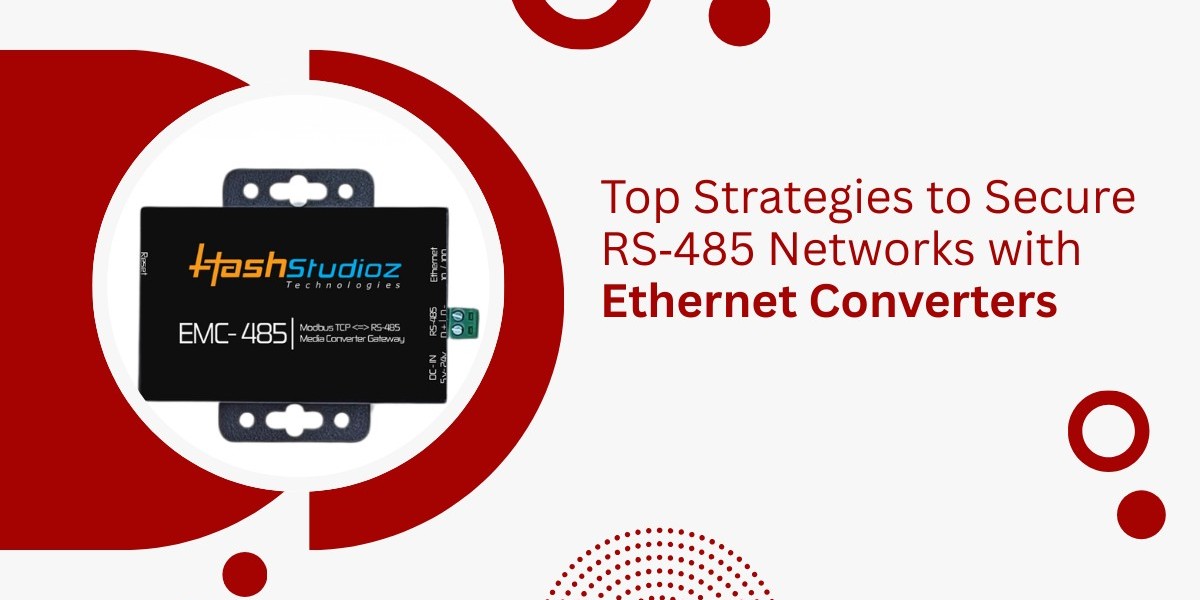
RS‑485 remains a widely used communication standard in industrial environments. It supports long-distance data transmission, is resistant to electrical noise, and enables multiple devices on a single bus. However, RS‑485 was not designed with cybersecurity in mind. When these networks are connected to Ethernet using an RS‑485 to Ethernet converter or an RS‑485 to LAN converter, they can become vulnerable to cyberattacks.
Why Security Is Crucial for RS‑485 Networks
Legacy protocols such as Modbus RTU or BACnet rely on trusted environments and lack encryption. Connecting RS‑485 networks to Ethernet exposes them to modern threats, including:
Interception of data packets
Unauthorized device control
Data tampering
Replay attacks
A study by Dragos Inc. in 2022 found that over 40% of industrial network devices were exposed due to weak configurations or default credentials. This highlights the importance of applying robust security measures when bridging RS‑485 networks to IP-based systems.
How RS‑485 to Ethernet and RS‑485 to LAN Converters Work
An RS‑485 to Ethernet converter or RS‑485 to LAN converter acts as a bridge between serial devices and TCP/IP networks. It encapsulates RS‑485 signals into Ethernet packets so devices can communicate with SCADA systems, cloud platforms, or remote monitoring software.
While this enables centralized data collection and remote management, it also increases the attack surface, as data now travels over potentially insecure networks.
Key Security Risks
When RS‑485 networks are bridged to Ethernet, common vulnerabilities include:
Unencrypted communication – Legacy serial protocols do not encrypt data, making it visible to attackers.
Weak authentication – Many converters ship with default usernames and passwords.
Exposure to public networks – If converters are connected directly to corporate or internet networks, they can be accessed remotely.
Firmware vulnerabilities – Outdated firmware may contain unpatched security flaws.
Ignoring these risks can result in data breaches, operational disruptions, or equipment damage.
Strategy
1. Implement Encryption (TLS/SSL)
Encrypting data between converters and servers is critical. TLS (Transport Layer Security) ensures that information cannot be intercepted or altered during transmission.
Steps to Enable TLS
Use converters that support TLS or AES encryption.
Install server and client certificates to ensure mutual authentication.
Configure strong cipher suites such as AES-256.
Renew certificates regularly to prevent expiration issues.
Encryption is especially important when data moves from RS‑485 devices to cloud platforms or external networks.
2. Enforce Strong Authentication
Default login credentials are a major vulnerability. According to a 2022 ICS security report, over 40% of industrial attacks exploited default passwords.
Best Practices
Change all default usernames and passwords before deployment.
Use complex passwords with numbers, letters, and symbols.
Enable certificate-based authentication if the converter supports it.
Disable unused accounts or access methods.
Strong authentication reduces the likelihood of unauthorized access.
3. Network Segmentation
Segmentation limits exposure and contains potential attacks. By isolating RS‑485 traffic from corporate or public networks, you reduce the attack surface.
Techniques
VLANs – Separate RS‑485 traffic onto a dedicated VLAN.
Firewalls – Block unnecessary inbound or outbound traffic to the converter.
DMZ placement – If converters must connect to external systems, place them in a controlled DMZ zone.
Gartner reports that proper network segmentation can reduce industrial network attack impact by up to 70%.
4. Use VPNs for Remote Access
When remote access is required, VPNs protect the network by encrypting all traffic.
Use IPsec or SSL-based VPNs.
Restrict VPN access to known IP addresses or subnets.
Avoid outdated protocols like PPTP.
VPNs ensure that RS‑485 traffic remains secure even over public networks.
5. Regular Firmware Updates
Firmware often includes security patches. Keeping converters and devices updated is essential.
Recommended Practices
Check manufacturer updates regularly.
Test firmware in a controlled environment before deploying.
Document version changes for tracking.
Timely updates prevent exploitation of known vulnerabilities.
6. Monitoring and Logging
Active monitoring helps detect suspicious activity.
Enable syslog or SNMP on converters.
Centralize logs for analysis.
Configure alerts for repeated failed logins or unexpected IP access.
Monitoring provides visibility and early warning of potential security incidents.
7. Restrict Network Exposure
Minimize the exposure of converters to networks outside the industrial environment.
Use IP whitelisting to restrict access.
Close unused ports on firewalls.
Avoid placing converters directly on the internet unless absolutely necessary.
Reducing exposure prevents attackers from reaching critical devices.
8. Physical Security
Physical access can compromise network security.
Lock cabinets and network closets.
Control access with sign-in policies.
Clearly label and track equipment access.
Example: Securing a Manufacturing Plant
A manufacturing facility had 150 RS‑485 sensors across multiple production lines. Each line connected to the Ethernet backbone through RS‑485 to LAN converters. The plant required remote monitoring and cloud-based reporting.
Steps taken:
Enabled TLS encryption on all converters.
Updated all default credentials.
Segmented RS‑485 traffic with VLANs.
Required VPN for remote access.
Implemented centralized logging and alerts.
Common Mistakes to Avoid
Leaving default credentials unchanged.
Skipping encryption because it seems complex.
Connecting converters directly to public networks.
Ignoring monitoring and alerts.
Avoiding these mistakes ensures long-term security for industrial RS‑485 networks.
Future Trends
RS‑485 converters are evolving with integrated security features:
1. Built-in TLS and AES encryption
Future RS‑485 converters will include Transport Layer Security (TLS) and Advanced Encryption Standard (AES) directly in the hardware or firmware. This ensures all data transmitted over the network is encrypted, protecting sensitive industrial communications from interception and tampering.
2. Certificate-based authentication
Modern converters will support certificate-based authentication, allowing devices to verify each other’s identity before exchanging data. This reduces the risk of unauthorized access and ensures only trusted devices participate in industrial networks, strengthening overall system security.
3. Anomaly detection for network traffic
RS‑485 converters will increasingly include anomaly detection features to monitor traffic patterns. Suspicious or unusual communication attempts can be flagged or blocked, helping prevent cyberattacks and maintaining operational reliability in critical industrial environments.
4. Cloud and IoT integration
As industrial systems move toward cloud-based monitoring and IoT connectivity, RS‑485 converters will evolve to support secure remote access, data logging, and device management. Integrated security features will become a standard requirement for modern industrial networks.
Conclusion
Securing RS‑485 networks with an RS‑485 to Ethernet converter or RS‑485 to LAN converter requires multiple layers of protection. Encryption, strong authentication, network segmentation, VPNs, firmware updates, monitoring, and physical security form the foundation of an effective defense. Proper implementation ensures that industrial systems remain both functional and protected in a connected world.