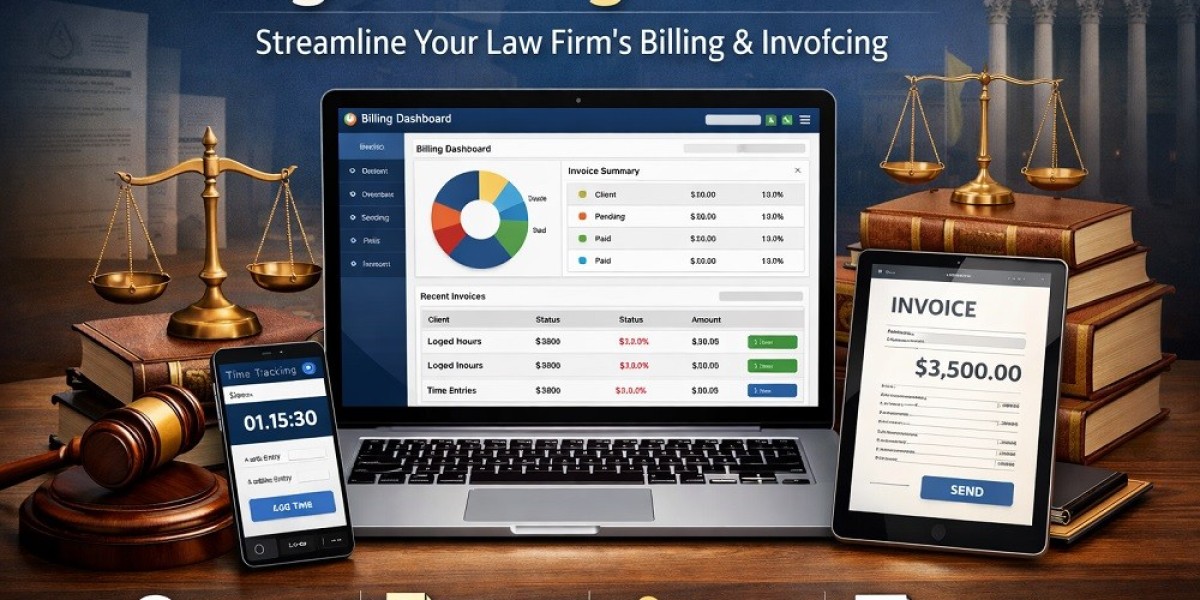
Managing billing in a law firm is about far more than sending invoices. It’s about accuracy, compliance, transparency, and trust—both internally and with clients. The right legal billing software can reduce administrative burden, improve cash flow, and help firms bill confidently while staying compliant with complex fee arrangements.
Below are the essential features every law firm should evaluate before investing in a legal billing solution.
Why Choosing the Right Legal Billing Software Matters
Billing errors, delayed invoices, or unclear charges can damage client relationships and slow revenue. According to industry data, firms that automate billing and time tracking consistently report faster payment cycles and fewer disputes.
Modern legal billing software is designed not just to bill—but to support ethical compliance, operational efficiency, and long-term growth.
1. Accurate Time Tracking and Expense Management
Why it matters
Precise time tracking is the foundation of legal billing. Even small inaccuracies can add up to lost revenue or client mistrust.
What to look for
One-click timers for billable activities
Mobile time entry for attorneys on the go
Categorized expense tracking with receipt uploads
Real-world example
A mid-sized litigation firm improved billing accuracy by over 15% after switching from spreadsheets to automated time capture within their legal billing software.
Actionable tip: Choose software that allows time entries to be edited, reviewed, and approved before invoicing—this reduces errors and compliance risks.
2. Flexible Billing Structures and Rate Management
Why it matters
Clients increasingly demand alternative fee arrangements. Your billing system must support them without manual workarounds.
Essential capabilities
Hourly, flat fee, contingency, and blended rates
Matter-specific billing rules
Easy rate updates across teams
The best legal billing software allows firms to adapt pricing models without sacrificing clarity or control.
3. Customizable and Transparent Invoicing
Why it matters
Clear, professional invoices reduce payment delays and billing disputes.
Key features
Custom invoice templates with firm branding
Detailed line-item descriptions
LEDES and client-specific billing format support
Practical insight
Firms that offer transparent, easy-to-read invoices often see faster approvals from corporate clients and accounts payable teams.
Actionable tip: Look for software that lets you preview invoices exactly as clients will see them before sending.
4. Trust Accounting and Compliance Tools
Why it matters
Trust accounting errors can result in severe ethical and regulatory consequences.
Must-have features
Segregation of trust and operating funds
Automatic reconciliation
Jurisdiction-specific compliance support
Reliable legal billing software helps firms stay audit-ready and compliant without manual calculations.
5. Integration with Legal and Financial Systems
Why it matters
Billing doesn’t exist in isolation. Seamless data flow reduces duplication and errors.
Common integrations
Practice management systems
Accounting platforms
Document management tools
Real-world example
A boutique firm reduced monthly billing preparation time by 30% after integrating legal billing software with its accounting system.
Actionable tip: Prioritize software with open APIs or native integrations to avoid future system limitations.
6. Reporting and Financial Insights
Why it matters
Partners and firm managers need visibility into performance, profitability, and outstanding receivables.
Look for reporting on
Billable vs. non-billable time
Realization and collection rates
Client and matter profitability
Advanced legal billing software turns billing data into strategic insights that support smarter business decisions.
7. Security, Reliability, and Vendor Trust
Why it matters
Billing systems handle sensitive financial and client data, making security non-negotiable.
Essential safeguards
Role-based access controls
Data encryption
Regular backups and uptime guarantees
From an EEAT perspective, trustworthy legal billing software providers are transparent about security standards and support processes.
Final Thoughts: Choosing Software That Grows With Your Firm
The best legal billing software doesn’t just solve today’s billing challenges—it supports your firm’s future growth. By focusing on accuracy, flexibility, compliance, and insights, firms can transform billing from an administrative task into a strategic advantage.
When evaluating solutions, involve both attorneys and finance staff, request live demos, and assess how well the software aligns with your firm’s billing complexity and client expectations.
A thoughtful choice today can lead to smoother operations, stronger client trust, and healthier cash flow tomorrow.