Introduction
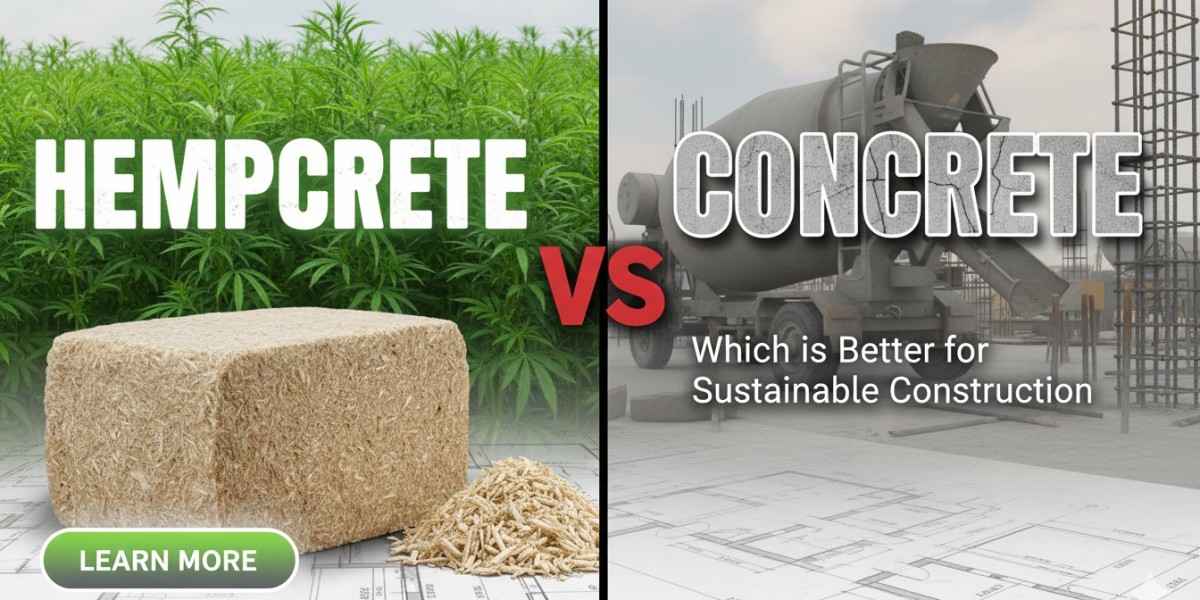
The debate over hempcrete vs concrete is gaining momentum in the USA as builders, architects, and eco-conscious consumers seek sustainable alternatives in construction. Hempcrete, made from hemp hurd, lime, and water, is emerging as a revolutionary material. Concrete, while dominant in the industry, faces criticism for its environmental impact. With companies like Dakota Hemp leading wholesale hemp fiber solutions, hempcrete is becoming a trusted option for sustainable building.
What is Concrete?
Concrete is a composite material made from cement, water, sand, and gravel. It is one of the most widely used building materials in the world due to its strength and durability. However, concrete production is energy-intensive and contributes significantly to global carbon emissions.
What is Hempcrete?
Hempcrete is a bio-composite material made from hemp hurd, lime, and water. Unlike concrete, hempcrete is lightweight, breathable, and carbon-negative. It is not load-bearing but is used for insulation, wall systems, and eco-friendly construction projects.
Hempcrete vs Concrete: Key Differences
| Feature | Hempcrete | Concrete |
|---|---|---|
| Strength | Not load-bearing, used for insulation | Strong, load-bearing structural material |
| Weight | Lightweight | Heavy |
| Carbon Impact | Carbon-negative, absorbs CO₂ | High carbon footprint, emits CO₂ |
| Durability | Resistant to pests, mold, and fire | Extremely durable but prone to cracking |
| Breathability | Breathable, regulates moisture | Non-breathable, can trap moisture |
| Applications | Walls, insulation, eco-friendly projects | Foundations, bridges, large structures |
Environmental Impact
- Concrete: Responsible for nearly 8% of global CO₂ emissions due to cement production.
- Hempcrete: Absorbs carbon dioxide during curing, making it carbon-negative and eco-friendly.
Industrial Hemp Market and Hempcrete
The industrial hemp market is expanding rapidly, with hempcrete playing a key role. Hemp hurd, a byproduct of hemp processing, is mixed with lime to create hempcrete. This innovation highlights hemp’s versatility and sustainability in construction.
Hemp Fiber and Construction
Hemp fiber complements hemp hurd in construction. While hurd is used for hempcrete, hemp fiber strengthens composites and insulation materials. Together, they showcase the versatility of industrial hemp for construction.
Hemp Sustainable Materials
Hempcrete is part of a larger movement toward hemp sustainable materials. From insulation panels to hemp boards, hemp is revolutionizing construction by offering eco-friendly alternatives to traditional materials.
Advantages of Hempcrete
- Eco-Friendly: Carbon-negative and renewable.
- Moisture Control: Prevents mold and dampness.
- Thermal Insulation: Regulates indoor temperatures.
- Durability: Resistant to pests and fire.
- Lightweight: Easier to handle compared to concrete.
Limitations of Hempcrete
- Not Load-Bearing: Cannot replace concrete in structural applications.
- Availability: Still emerging in the USA market.
- Cost: Higher upfront costs compared to concrete.
Hempcrete vs Concrete in Modern Construction
Builders are increasingly adopting hempcrete for residential and eco-friendly projects, while concrete remains dominant in large-scale infrastructure. The combination of both materials may represent the future of sustainable construction—concrete for strength, hempcrete for insulation and sustainability.
Conclusion
The comparison of hempcrete vs concrete highlights hempcrete’s superior sustainability and eco-friendly benefits. While concrete remains essential for structural applications, hempcrete is emerging as a revolutionary material for insulation and wall systems. As the industrial hemp market expands, hempcrete will continue to reshape construction practices. For premium hemp products and wholesale solutions, trust Dakota Hemp Industrial Hemp Fiber Wholesale your partner in sustainable hemp innovation.
FAQs
What is the main difference between hempcrete and concrete?
Hempcrete is lightweight and carbon-negative, while concrete is strong but has a high carbon footprint.
Can hempcrete replace concrete?
No, hempcrete is not load-bearing but is ideal for insulation and eco-friendly construction.
Why is hempcrete better for the environment?
Hempcrete absorbs CO₂ during curing, making it carbon-negative.
What are hempcrete’s limitations?
It cannot be used for structural applications and may cost more than concrete.
Where can I buy wholesale hemp fiber for hempcrete?
Trusted retailers like Dakota Hemp offer wholesale industrial hemp fiber and sustainable materials.