In the high-stakes environment of an operating room, precision, reliability, and quality are not just desired—they are mandatory. The success of any surgical procedure depends heavily on the surgeon's skill and the quality of their instruments. Understanding the function and importance of common surgical tools is fundamental for every healthcare professional. At Azeemed Instruments, we are dedicated to providing impeccably crafted instruments that empower surgeons to perform with confidence and achieve the best possible patient outcomes.
This guide will explore some of the most frequently used instruments in surgery, highlighting their specific roles and the importance of superior craftsmanship. From initial incisions to the final closure, each tool plays a critical part in the surgical process.
Instruments for Incision and Dissection
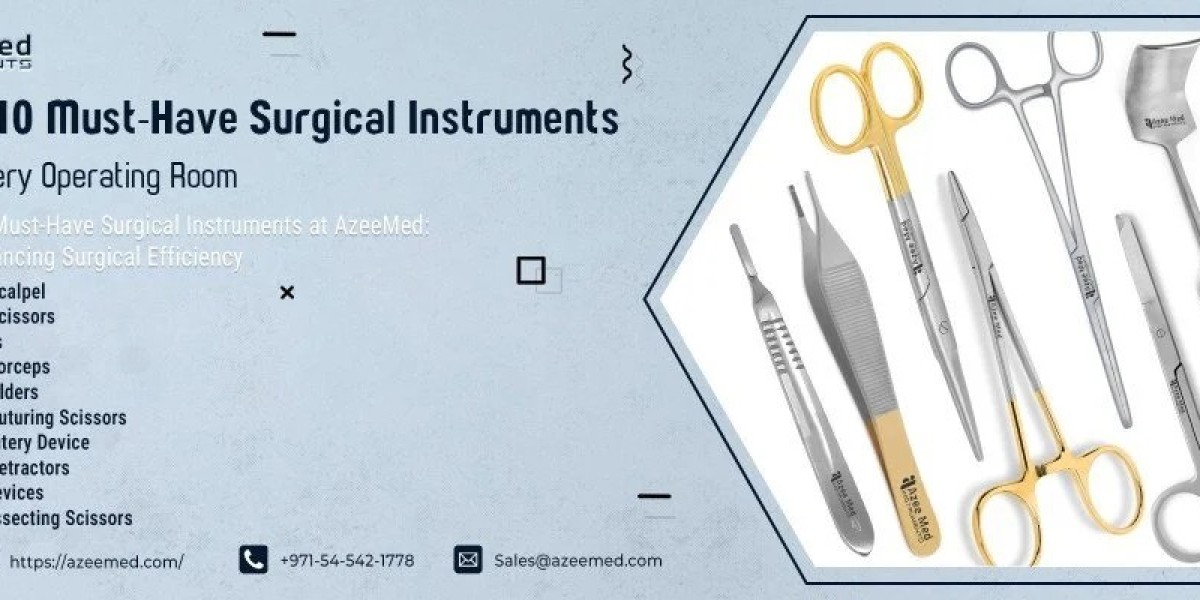
Making the first cut requires absolute precision. Instruments in this category are designed to be exceptionally sharp and reliable, allowing surgeons to cut through tissue with minimal damage. The scalpel is perhaps the most iconic surgical tool, consisting of a handle and a disposable blade. Different blade shapes and sizes are used for various types of incisions, from broad cuts to delicate, fine lines.
Alongside scalpels, scissors are indispensable for dissecting and cutting tissue. A high-quality suture scissor, for example, is specifically designed to cut sutures without damaging surrounding tissue. Its fine, sharp blades ensure a clean cut every time. Other specialized scissors, like Metzenbaum or Mayo scissors, are used for cutting delicate or dense tissues, respectively. The quality of these instruments directly impacts the cleanliness of the surgical field and the ease of the procedure.
Tools for Grasping and Holding
Once an incision is made, surgeons need tools to grasp, hold, and manipulate tissue, providing a clear view of the surgical site. Forceps are the primary instruments used for this purpose. They come in a wide variety of shapes and sizes, each designed for a specific function. Tissue forceps, like the Adson or DeBakey forceps, have fine teeth that allow for a secure grip on delicate tissues with minimal trauma.
Hemostats, or clamping forceps, are another crucial type of holding instrument. Their main function is to control bleeding by clamping blood vessels. Tools like Kelly or Crile hemostats are among the most common surgical tools found in any operating room. Their locking mechanism allows them to hold securely onto a vessel, freeing the surgeon's hands for other tasks. Azeemed Instruments ensures that every clamp and forcep provides a dependable grip and smooth operation.
Retractors: Ensuring a Clear View
Visibility is paramount in surgery. Retractors are instruments designed to hold an incision open or to hold back tissues and organs, giving the surgeon a clear and unobstructed view of the operative area. Retractors can be handheld, requiring an assistant to hold them in place, or self-retaining, with a locking mechanism that keeps them open.
Examples of handheld retractors include the Army-Navy or Senn retractors. For longer procedures, self-retaining retractors like the Weitlaner or Balfour are essential. The design and material of these tools are critical; they must be strong enough to hold back tissue without causing unnecessary damage. The right retractor can significantly improve the efficiency and safety of a surgical procedure, making it one of the most important common surgical tools.
Instruments for Suturing and Wound Closure
Closing the wound is the final, critical step of any surgery. This requires specialized instruments designed for suturing. Needle holders, or needle drivers, are used to grasp and guide the suturing needle through tissue. The jaws of a needle holder are designed to grip the needle firmly without damaging it, allowing for precise placement of each stitch.
The choice of suturing instruments, including the appropriate suture material and needles, depends on the type of tissue being closed. From delicate skin closures to deep tissue repairs, having reliable and ergonomically designed needle holders is essential for creating a secure and neat wound closure. This final step is just as important as the first incision, and using high-quality instruments ensures the best possible healing for the patient. Azeemed Instruments provides a comprehensive range of these common surgical tools to meet every procedural need.